Role

UX/UI Designer (Concept redesign)

Research and incorporation of user reviews as qualitative input, followed by iterative prototyping and validation through task-based testing.

Work Duration

1 week

Focus

Scrum-driven experiment focused on measuring and improving task efficiency across key shopping operations.

OUTCOMES

–59.3%

Time-to-task

Context

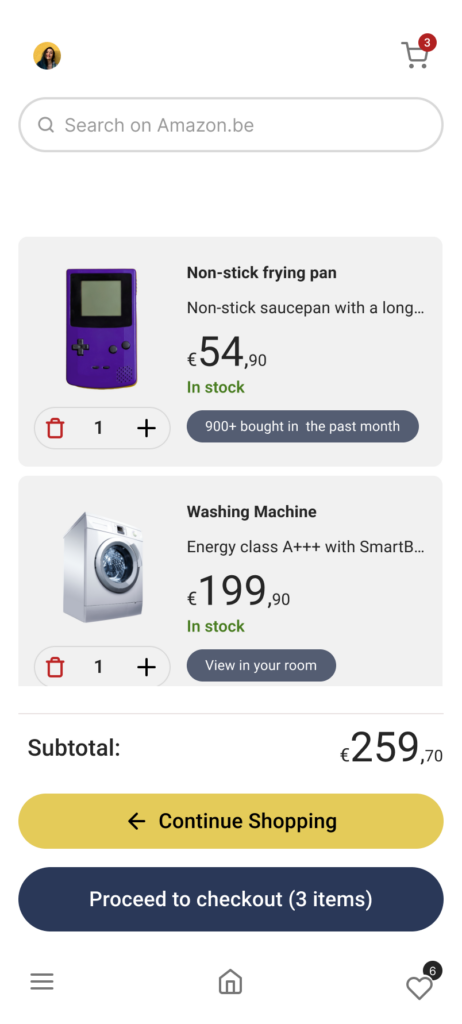
This project explores how small structural UI decisions impact core shopping tasks in a high-pressure mobile e-commerce environment.

Starting from the most negative user reviews written by highly frustrated users, I identified critical breakdowns in the shopping flow and translated them into testable product hypotheses.

Problem

User feedback revealed three recurring issues affecting task completion:

Categories were hidden behind multiple interactions
Wishlist and saved items were difficult to locate
• Primary actions such as Add to cart and Proceed to payment lacked visibility

These issues increased cognitive load and slowed down task execution.

KPIs

  • Time on task

  • Task success rate

  • Navigation errors (misclicks, backtracking)

Quick notes and analysis of pain points

Approach

I extracted qualitative insights from user reviews and translated them into a prioritized backlog of UX improvements and iterated through three core task flows.

Each iteration was validated through task-based usability testing to determine whether it represented a meaningful increment or required further refinement.

Definition of Done

  • The user can complete the task without external assistance
  • Time on task meets or improves the defined KPI threshold
  • The task success rate is ≥ the benchmark established during baseline testing
  • No critical navigation errors or blocking confusion are observed
  • Insights and results are documented and compared against the original flow

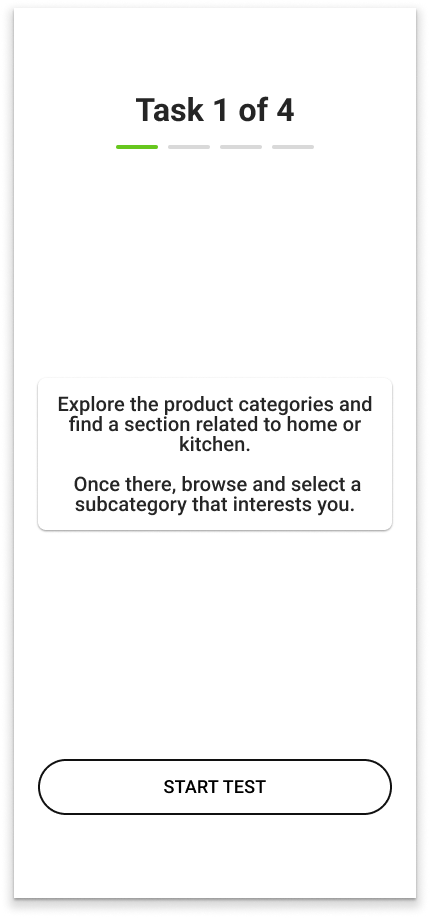
Task guide with instructions for the user test

User Story

As a shopper, I want to easily navigate, save, and purchase products so I can complete my shopping efficiently.

User Goal

Quickly browse product categories

Retrieve items saved in the wishlist

Move from cart to checkout with minimal friction

Observed Pain Points

Lack of visual hierarchy for exploration

No immediate visual hierarchy for exploration

Users defaulting to search instead of browsing

Wishlist buried inside the profile section

TESTING PHASE

The unmoderated usability testing involved 8 participants and focused on improving four core tasks derived from the most critical user reviews: browsing products via category filters, adding items to the wishlist, moving items from the wishlist to the cart, and completing checkout from the cart.

Outcomes

  • Category exploration time reduced by 48%

  • Adding a product from wishlist to cart time improved by 73%

  • Checkout flow parity maintained with no regression

TESTED TASKS:

Select category and sub category

Add a product to wishlist

Add product from wishlist to cart

Proceed to the checkout from the cart

Failed task

Add item to wishlist

The task exceeded the KPI threshold by 15% and did not meet usability expectations.

During testing, users experienced confusion caused by redundant iconography. Identical heart icons were used for different actions, leading to hesitation, errors, and task failure.

Iteration & Validation

The wishlist task was removed from the sprint and returned to the backlog.

The solution was paused for redesign and re-tested at mid-fidelity before progressing to high-fidelity.

Task failed:

Add item to wishlist

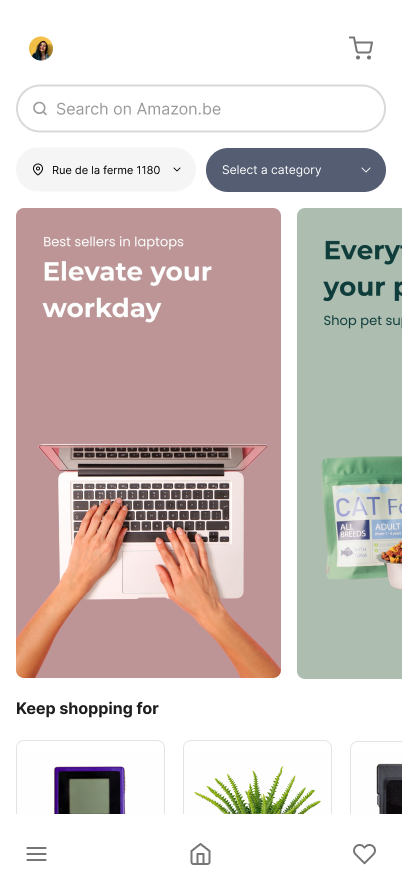
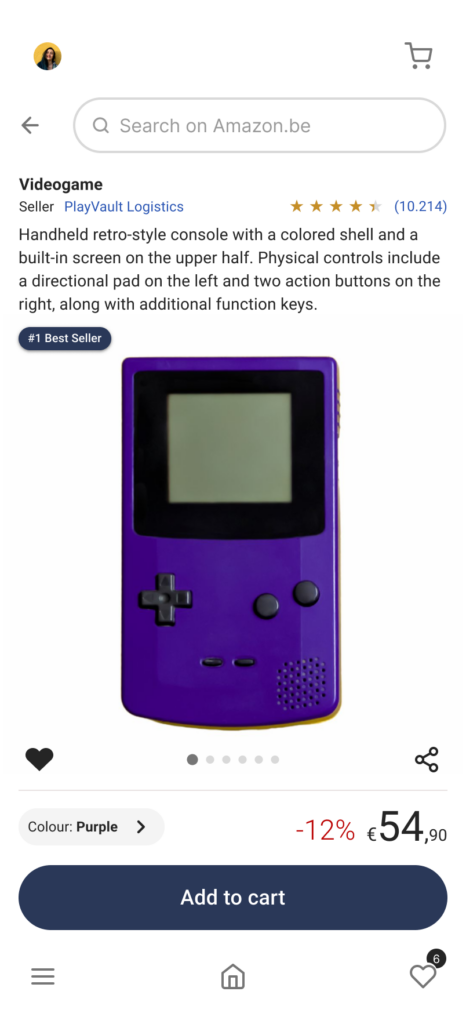
High Fidelity Wireframes

Visual hierarchy is improved by clearly prioritizing primary CTAs, while transparency is increased through more scannable reviews, ratings, and key purchase information.

A fixed “Add to Cart” CTA remains visible on scroll, reducing cognitive and interaction effort without altering users’ mental models.
Interactive Prototype

The final prototype supported task-based testing with real users, allowing each increment to be validated against measurable performance improvements.

KPI indicators focused on time-on-task and task efficiency improvements compared to the original app.

See other projects

B2C Marketplace · Buyer Web App

Drop-Off Reduced by 84% on Buyer Funnel

End-to-end UX/UI redesign of buyer flows and design system to stabilize critical steps and improve conversion on key transactions.

B2C Marketplace · Supplier Web App

Task Success Increased by X%

End-to-end UX/UI redesign of seller flows and work tool to streamline operational steps and improve accuracy on core transactions.

LegalTech · Consulting Platform

84% alignment with Thomson Reuters standards

End-to-end UX/UI design of LexAI Consulting website for Fortune 500 clients backed by Deloitte, to build credibility and improve CRO.